


Colorado holds dog owners strictly liable for serious bite injuries, which means you can often pursue compensation for medical costs and other losses without proving the owner did anything wrong or knew the dog was dangerous.
In reality, most claims are handled through the dog owner’s homeowner’s or renter’s insurance, not personal funds. The insurance company is responsible for paying, and it will still evaluate the claim based on its own interests.
Our Englewood dog bite injury lawyers at Legal Help in Colorado handle these cases across Arapahoe County, focusing on documenting injuries, identifying coverage, and pursuing fair compensation for victims, including children.
Colorado’s Strict Liability Standard: What It Actually Means for Your Case
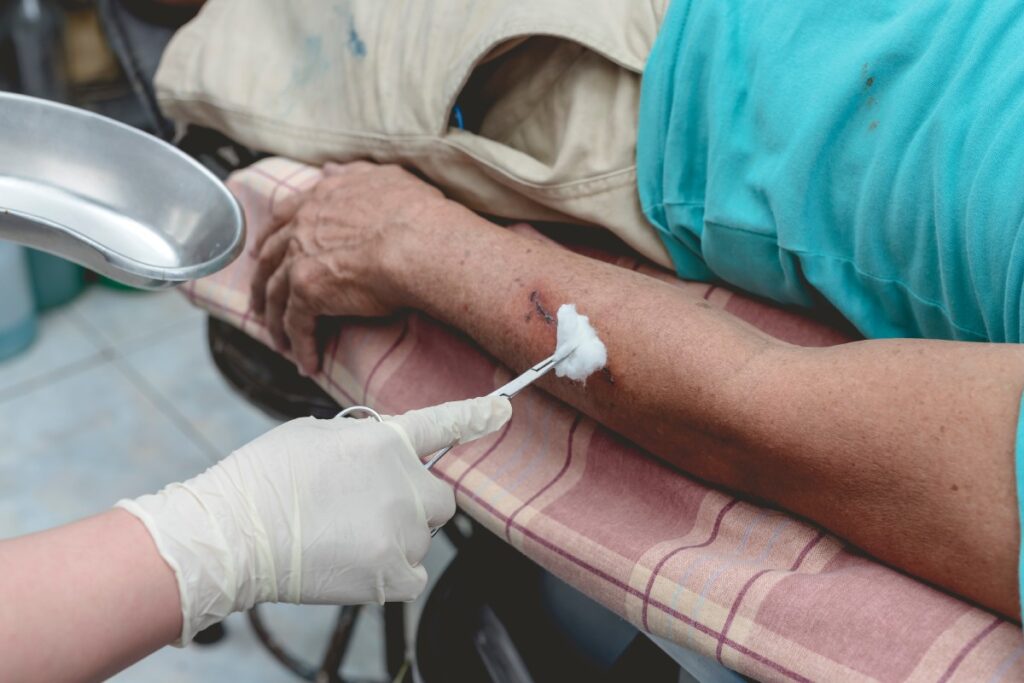
Colorado’s dog bite statute, C.R.S. § 13-21-124, establishes a two-track liability system that heavily depends on the severity of your wounds. The law applies a strict liability standard only if the attack results in serious bodily injury or death. Under Colorado law, this means injuries involving a substantial risk of death, severe permanent disfigurement (like visible facial scarring), or the protracted loss or impairment of a body part or organ.
If your injury meets this high threshold, the owner is automatically liable for your economic damages (medical bills, reconstructive surgeries, and lost wages), regardless of whether they knew the dog was dangerous.
However, if the bite results in a non-serious physical injury, or if you are seeking to recover non-economic damages like pain and suffering damages, strict liability won’t cover it. Instead, we must pursue your claim through a parallel legal track based on traditional negligence or local animal control violations.
This is a meaningful legal advantage compared to states that still use the “one bite rule,” which protects owners from liability until a dog has demonstrated prior dangerous behavior. Colorado eliminated that protection for serious bites under the strict liability statute.
Two conditions, however, can affect a strict liability claim. First, if the injured person was trespassing, the strict liability standard does not apply. Second, if the injured person was provoking the dog, that provocation can be raised as a defense. Provocation is a fact-specific question.
Accidentally stepping on a dog or startling it while reaching past it does not meet the legal threshold for provocation. Intentionally antagonizing the animal does. Where provocation is raised as a defense, we examine exactly what happened and build a factual record that addresses the argument on its actual merits.
Speak with an Englewood dog bite attorney before accepting any offer from the owner’s insurer. Call us for a free consultation.
Where Dog Bites Happen in Englewood and Why It Matters
Englewood’s residential character shapes the context in which most dog bites occur here. The city has a high density of single-family homes and smaller multi-unit properties, particularly in the neighborhoods west of South Broadway and along streets like South Acoma, South Bannock, and South Cherokee.
Dog ownership is common throughout these areas. Incidents happen at the neighbor’s front yard, at a backyard gathering, during a walk through Rotolo Park or Centennial Park, or at the entrance to an apartment building where a dog was brought off-leash into a shared area.
Each of these settings carries its own liability analysis.
Apartment and multi-family properties.
When a dog bite occurs in a shared common area of an apartment complex, liability may extend beyond the dog owner. Property managers and landlords who knew a tenant kept a dangerous animal and took no action to address the risk have faced liability under premises-based theories. This is a separate claim that runs alongside or in addition to the claim against the dog owner.
Englewood parks and public trails.
Arapahoe County and the City of Englewood maintain parks where leash requirements apply. An off-leash dog that bites in a designated leash-required area creates a clear record of the owner’s violation. That violation does not automatically create a new legal theory, but it does strengthen the factual picture of the owner’s conduct.
Residential street encounters.
Bites that occur when a dog runs from a yard or property onto a public sidewalk or street are common in Englewood’s denser residential neighborhoods. These incidents often involve fencing that was inadequate or in disrepair, or owners who let dogs out unsupervised. Documentation of the property’s fencing condition at the time of the incident matters in these claims.
Awards & Accolades
The Injuries That Shape Dog Bite Claims
The physical severity of a dog bite depends on the size of the animal, the location of the bite, and the age and health of the victim. Several injury categories require particular attention in a claim.
Puncture wounds and lacerations are among the most common dog bite injury claims we handle. These wounds often require an extended course of treatment, and the cost of that full course belongs in the claim. We make sure the medical records after an accident documenting the treatment, from the initial visit through any follow-up, become part of the damages we pursue.
Facial injuries and scarring. Children are bitten on the face more often than adults because their height puts them at the level of a medium or large dog’s head. Facial lacerations may require plastic surgery and, even with excellent surgical care, produce permanent scarring that affects appearance and carries psychological consequences.
In children, growth can alter how scars develop over time, meaning the full extent of cosmetic damage is sometimes not apparent for years.
Psychological trauma. Fear of dogs after a dog bite attack is common and clinically recognized as a form of post-traumatic stress. Children who develop severe animal phobias after an attack often require extensive behavioral therapy. Because Colorado’s strict liability statute covers economic losses only, these psychological impacts fall outside it and must be pursued as non-economic damages through a separate negligence claim.
To recover full compensation for your pain, suffering, and emotional trauma, our legal team builds a parallel claim grounded in negligence. This helps prove that the owner failed to exercise reasonable care or directly violated local Englewood safety laws.
Insurance Coverage and Where the Money Actually Comes From
Most dog bite claims in Colorado run through a homeowner’s or renter’s insurance policy. Standard homeowner’s policies typically include personal liability coverage that applies to dog bite claims. That coverage generally starts at $100,000 and frequently reaches $300,000 or more.
Several complications affect this analysis in practice.
Some policies exclude specific breeds. American Pit Bull Terriers, Rottweilers, and German Shepherds are among the breeds some insurers exclude from coverage or require separate riders to cover. If the dog that bit you belongs to one of these breeds and the owner’s policy excludes it, the claim may need to run through other avenues, including a direct action against the owner.
When we identify a breed exclusion on a policy covering an Englewood bite claim, our first step is pulling the full policy language rather than accepting the insurer’s denial at face value. Exclusions are often written narrowly, and how a dog is classified under the policy sometimes differs from how the owner describes the animal. Pushing back on that classification with the owner’s own records is one of the more productive early moves in these cases.
Some owners carry no insurance at all. Renters without renters’ insurance, owners in informal housing situations, or owners whose policies lapsed present a different set of options. We investigate available assets and insurance coverage early in every case so clients have an accurate picture of where recovery is realistically available.
When the bite occurred on a rental property, we investigate whether the landlord’s commercial general liability policy or the tenant’s renters’ policy applies, or both. This analysis depends on the ownership structure of the property and what the landlord knew about the animal.
Not sure whose policy covers your bite? We find the coverage. Call (303) 351-2567 for a free case review, available 24/7.
Cases Involving Children Require Additional Steps
Settlement of a dog bite claim on behalf of a minor requires court approval in Colorado. This rule exists to protect the child’s interests, ensuring that any settlement is independently evaluated as fair, given the nature and long-term consequences of the injuries. The process involves filing a petition in district court and having a judge review the proposed settlement.
We guide families through this process, including preparing the required documentation and attending the approval hearing. For children with facial scarring or injuries with long-term consequences, we make sure the settlement figure actually accounts for the full trajectory of the child’s recovery, including future medical needs and the psychological impact of visible scarring as the child grows.
Meet Our Englewood Injury Attorneys
Led by founder Ross Ziev, the Englewoood personal injury attorneys at Legal Help In Colorado are dedicated to helping injury and accident victims recover the compensation they deserve.



What Happens After You Contact Us
Most dog bite clients have never filed a legal claim before and are not sure what to expect once they reach out. Here is how the process works.
First, we review the facts of your case at no charge and tell you directly whether you have a viable claim. If we take your case, we begin by gathering the evidence that has the shortest shelf life: incident reports from Englewood or Arapahoe County Animal Control, photographs of your injuries, and any available surveillance footage from the area where the bite occurred.
Next, we identify every available insurance policy and confirm coverage before making any demand. Once your medical treatment is complete or your condition has stabilized, we build a full damages picture that includes all past and future costs.
From there, we negotiate with the insurer directly. If the offer does not reflect the full value of your claim, we are prepared to litigate.
Call today for a free case review. No fees unless we recover for you.
Contact Our Englewood Dog Bite Attorneys Today
Dog Bite Questions Answered by Our Englewood Attorneys
Does the dog need to have bitten someone before for me to have a claim?
No. Colorado does not follow a traditional one-bite rule for serious injuries. Under C.R.S. § 13-21-124, owners are strictly liable for economic medical losses in serious bite cases. For non-serious injuries or additional damages like pain and suffering, a negligence claim may still apply if the owner failed to properly restrain the dog.
What if the bite happened at someone’s house I was visiting?
Being invited onto the property strengthens your claim rather than limiting it. As a lawfully present guest, you are covered under Colorado’s dog bite statute, and in most cases, the claim runs through the homeowner’s insurance policy, not the owner’s own pocket. The personal relationship can feel uncomfortable, but it does not change what that policy is designed to cover. An experienced Englewood personal injury attorney can help you navigate the claims process while protecting your legal rights.
How do I document a dog bite injury claim properly?
Seek medical attention immediately, even for minor-looking bites. Ask the facility to photograph the wounds before cleaning or closure. Report the bite to Englewood or Arapahoe County Animal Control to create an official record. Get the owner’s name, address, and insurance details. Photograph the scene, note any witnesses, keep every medical record, and contact us early so we can preserve surveillance footage before it overwrites.
Can I make a claim if I was bitten while jogging past someone’s property?
Yes. A person using a public sidewalk or street is lawfully present for purposes of Colorado’s strict liability statute. A dog that crosses from private property onto a public pathway to bite a passerby creates full liability for the owner. The condition of the owner’s fencing and whether the dog had previously escaped are relevant to whether additional negligence claims apply beyond the strict liability theory.
What if the dog knocked me down without actually biting me?
Colorado’s strict liability statute applies specifically to bites, so a knockdown injury without a bite falls outside it. You may still have a negligence-based claim if the owner knew the dog had a history of jumping on or knocking people down and failed to control it. The injuries are equally real. Contact us to discuss your specific circumstances.
How long do I have to file a dog bite claim in Colorado?
Two years from the date of the incident, under C.R.S. Section 13-80-102. For an injured child, that deadline is tolled until the child turns 18, giving them until their 20th birthday to file. Parents may still pursue a claim on the child’s behalf sooner, within the standard two-year period. Acting early preserves evidence and strengthens your claim.
Talk to an Englewood Dog Bite Lawyer Today

Whether the bite was from a neighbor’s dog, a dog encountered on a public trail, or an animal at a property where you were visiting, you have legal options. Our attorneys take these cases seriously, investigate the coverage available, and don’t accept inadequate settlements that fail to account for the full scope of your injuries.
Call (303) 351-2567 or (303) 529-3333 for a free case review. No fees unless we recover for you. Available 24/7.