


When an intoxicated driver causes a crash on Arapahoe Road or runs a red light at a South Parker Road intersection late at night, the injuries can be severe, and the anger is justified. The Centennial drunk driving accident lawyers at Legal Help in Colorado pursue civil claims on behalf of people who have been hurt by impaired drivers across Arapahoe County, seeking compensation through a process that is separate from any criminal charges the driver may face.
The distinction between criminal and civil cases matters. A DUI arrest holds the driver accountable to the state. A civil injury claim holds the driver, and sometimes other parties, financially accountable to you. Our attorneys in Greenwood Village represent injured clients in the civil claim while the criminal case proceeds separately through the courts. With over 20 years of combined experience and outcomes that include a $10.5 million verdict, our team brings the preparation these cases require. Call (303) 351-2567 at any hour for a free consultation.
How Does a Civil Claim Differ From a Criminal DUI Case?
Many people who have been injured by drunk drivers assume the criminal case handles everything. It does not. Criminal proceedings and civil injury claims run on separate tracks with different goals, different standards of proof, and different outcomes.
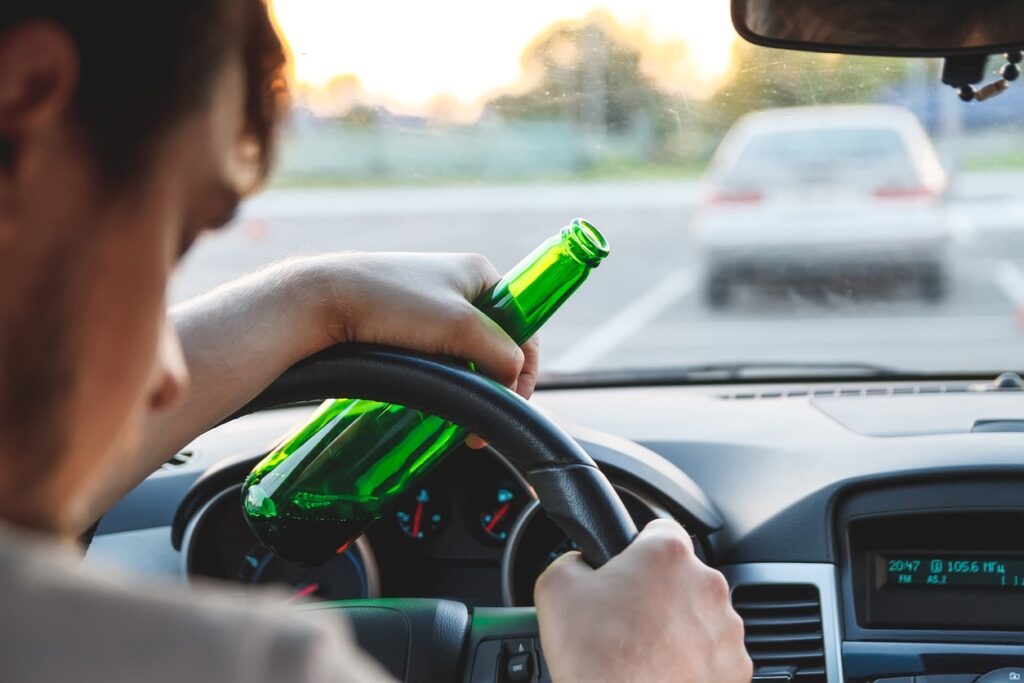
Two Separate Legal Processes
A criminal DUI case is brought by the state of Colorado against the driver. The goal is punishment, which may include jail time, fines, and license suspension. The victim has limited control over this process and receives no direct compensation from a criminal conviction.
A civil injury claim is brought by the injured person against the driver and potentially other liable parties. The goal is financial recovery for medical bills, lost income, pain, and other losses. The standard of proof is lower in civil cases, requiring a “preponderance of evidence” rather than the “beyond a reasonable doubt” standard used in criminal court.
This means a driver acquitted of DUI charges may still be held liable in a civil claim. The criminal case outcome does not control the civil case.
Why Choose Legal Help in Colorado After a Drunk Driving Crash?
Drunk driving accident claims involve layers of evidence, multiple liable parties, and insurance negotiations that differ from standard car accident cases. Our firm brings specific preparation to these claims that reflects their complexity.
Tracing Liability From the Driver to the Source
Police reports and BAC test results provide a starting point, but they rarely tell the full story. Our personal injury attorneys obtain surveillance footage from nearby businesses, review the driver’s movements before the crash, and investigate whether bars or restaurants over-served a visibly intoxicated patron. That investigation often uncovers dram shop claims or additional insurance coverage that a surface-level review misses. Tracing the alcohol service history is a critical part of how we build these cases.
Trial-Ready Preparation for Every DUI Claim
Our team has recovered a $2 million settlement and multiple six-figure outcomes for injured clients across Colorado. Voted Denver’s #1 Personal Injury Firm and recognized by Best Lawyers 2023, we prepare every drunk driving case as though it is going before a jury.
Consultations are free, available 24/7, and our contingency fee structure means no cost unless we recover compensation. Contact our team to discuss your Centennial drunk driving accident claim.
What Is Dram Shop Liability in Colorado?
Colorado law recognizes that the drunk driver is not always the only responsible party. In certain situations, the bar, restaurant, or liquor store that served the alcohol may also bear civil liability. This legal concept is called dram shop liability.
How the Law Works
Under Colorado’s dram shop statute, a licensed alcohol vendor may face liability when it serves alcohol to a person who is visibly intoxicated and that person later causes injuries. The key phrase is “visibly intoxicated.” The law does not hold vendors liable simply for serving alcohol. It applies when the signs of intoxication were apparent and the vendor continued serving anyway.
In practice, this means a bartender at a restaurant near the Denver Tech Center who continues pouring drinks for a customer who is slurring words, stumbling, or showing obvious signs of impairment may expose the establishment to liability. If that customer then drives south on I-25 and causes a crash in Centennial, the injured person may pursue a claim against both the driver and the restaurant.
Why Dram Shop Claims Matter
Dram shop liability opens an additional source of insurance coverage. The drunk driver’s auto policy may have limited coverage, but the restaurant or bar typically carries commercial liability insurance with higher policy limits. Identifying and pursuing these claims often increases the total compensation available to the injured person.
What Evidence Strengthens a Centennial Drunk Driving Accident Claim?
Drunk driving cases produce a unique body of evidence that distinguishes them from other vehicle accident claims. The combination of criminal investigation records and civil discovery often provides a stronger factual foundation than a typical crash case. Several categories of evidence play important roles in building a drunk driving injury claim, including the following:
- BAC test results from the arresting officer establish the driver’s level of impairment at or near the time of the crash
- Police reports and arrest records document the officer’s observations of the driver’s behavior, including field sobriety test performance
- Surveillance footage from businesses near the crash site or near bars and restaurants the driver visited may show the driver’s condition before getting behind the wheel
- Toxicology and blood test records provide objective measurements of alcohol concentration that may support impairment claims
- Witness testimony from other drivers, passengers, or bar staff may corroborate the driver’s intoxicated state before and during the crash
Criminal case records, including plea agreements and sentencing documents, may also be relevant in the civil claim. A DUI conviction or guilty plea creates a strong factual basis for proving negligence in the injury case.
Awards & Accolades
What Compensation May Be Available After a Centennial Drunk Driving Crash?
Drunk driving crashes often produce more severe injuries than other types of vehicle accidents. Impaired drivers frequently travel at excessive speeds, fail to brake, drive the wrong way on divided roads, or cause head-on collisions. The resulting medical costs, lost income, and pain tend to be substantial.
Standard Damages in DUI Crash Claims
Colorado law allows injured people to pursue economic damages for medical bills, future treatment, lost wages, and rehabilitation costs.
Non-economic damages for pain, suffering, emotional distress, and diminished quality of life also apply. Colorado law limits non-economic damages in many personal injury cases under C.R.S. § 13-21-102.5, although courts may increase the cap in certain circumstances.
Punitive Damages in Drunk Driving Cases
Drunk driving cases stand apart from other injury claims because punitive damages may be available. Under C.R.S. § 13-21-102, Colorado allows punitive damages when the defendant’s conduct shows willful and wanton disregard for the safety of others. Driving while intoxicated may meet that standard.
Punitive damages are not meant to compensate the injured person for losses. They are designed to punish especially reckless behavior and discourage similar conduct. In drunk driving cases, the decision to drive after heavy drinking frequently qualifies as the type of conduct Colorado’s punitive damage statute targets. A jury determines whether punitive damages apply and sets the amount.
Where Do Drunk Driving Crashes Happen in Centennial?
Drunk driving accidents in Centennial follow patterns tied to the city’s mix of commercial corridors, restaurant districts, and late-night traffic flow.
Late-Night Corridors and High-Risk Intersections
The National Highway Traffic Safety Administration reports that alcohol-impaired driving accounts for roughly 30% of all traffic fatalities nationwide. In Colorado, impaired driving crash data reflect similar patterns, with late-night and early-morning hours carrying the highest risk.
Arapahoe Road’s restaurant and retail corridor generates late-night traffic from patrons leaving dining and entertainment venues. South Parker Road handles a mix of commercial and residential traffic, where impaired drivers leaving nearby establishments may cross into oncoming lanes or fail to stop at signals.
The I-25 corridor through Centennial sees impaired drivers traveling at highway speeds, where wrong-way entries from on-ramps and delayed braking carry especially severe consequences.
Weekend and Holiday Risk Patterns
Drunk driving crashes spike on weekends, holidays, and during major sporting events. Friday and Saturday nights between 10 p.m. and 3 a.m. represent the highest-risk window in Centennial and across the Denver metro area.
The proximity of restaurants and bars along Arapahoe Road and Dry Creek Road to residential neighborhoods means impaired drivers often travel relatively short distances before causing a crash, sometimes within blocks of where they were drinking.
Our Greenwood Village office is located near these corridors, and our attorneys handle drunk driving injury claims from crashes across Centennial and Arapahoe County. Working with a car accident attorney can help ensure your claim is properly handled under Colorado law, including compliance with deadlines under C.R.S. § 13-80-101, which sets a three-year filing period from the date of the crash.
How Does Fault Work When the Other Driver Was Drunk?
Intoxication creates strong evidence of negligence, but it does not automatically resolve every question about fault. Colorado’s comparative negligence rules still apply, and insurance companies may still attempt to assign partial blame to the injured person.
Colorado’s Fault Rules in DUI Cases
Under C.R.S. § 13-21-111, Colorado assigns fault percentages to each party. Even in a drunk driving case, the insurance company may argue the injured driver was speeding, failed to take evasive action, or contributed to the collision in some way.
If the injured person is found less than 50% at fault, compensation is reduced by that percentage. At 50% or above, recovery is barred entirely. In practice, a drunk driver’s clear negligence makes it difficult for insurers to shift significant fault, but the argument still arises. Strong evidence of the drunk driver’s behavior, combined with documentation of the injured person’s lawful driving, helps protect against this tactic.
What Steps Protect a Drunk Driving Accident Claim’s Value?
The actions taken after a drunk driving crash affect the strength and value of the civil claim. Insurance companies evaluate these cases carefully, and certain steps help preserve a strong position. The following actions protect a drunk driving injury claim from common challenges:
- Seeking medical treatment promptly and following through with all recommended care creates a record that links injuries directly to the crash and demonstrates their severity
- Preserving all communication from insurance companies, including letters, emails, and voicemails, provides a record of how the claim has been handled
- Avoiding social media posts about the crash, your injuries, or your daily activities prevents adjusters from using your own content to dispute the claim
- Requesting a copy of the police report and any criminal case filings provides foundational documents for the civil claim
- Consulting with an attorney before providing recorded statements or accepting settlement offers prevents early decisions that may reduce the claim’s value
Each of these steps helps maintain the integrity of the claim and limits the insurance company’s ability to reduce compensation.
FAQ for Centennial Drunk Driving Accident Claims
Does a DUI conviction help my civil injury claim?
A DUI conviction or guilty plea creates strong evidence of negligence in a civil case. However, a civil claim does not depend on a conviction. Even if criminal charges are reduced or dismissed, the injured person may still pursue compensation based on the evidence of impairment.
What if the drunk driver had no insurance?
Uninsured and underinsured motorist coverage on your own auto policy may provide a path to compensation. Colorado requires insurers to offer this coverage, and drivers must reject it in writing to go without it. An attorney reviews all available policies to identify every source of potential recovery.
Are passengers in the drunk driver’s vehicle able to file claims?
Yes. A passenger in the intoxicated driver’s vehicle may pursue a claim against that driver. The passenger’s decision to ride with an impaired driver may raise comparative negligence questions, but it does not automatically bar a claim.
What if the crash involved a commercial driver who was intoxicated?
Crashes involving commercial vehicle operators who are impaired may create liability for the driver’s employer. Federal regulations from the Federal Motor Carrier Safety Administration set strict rules for commercial driver alcohol use, and violations may strengthen the injured person’s claim.
What is the difference between DUI and DWAI in Colorado?
DUI applies when a driver’s ability is substantially impaired by alcohol, typically at a BAC of 0.08 or higher. DWAI, driving while ability impaired, applies at a lower threshold, typically 0.05 to 0.079 BAC. Both charges indicate impairment and may support a civil injury claim.
Accountability Starts With a Single Phone Call

A crash caused by an intoxicated driver is preventable, and the law provides a path to hold the responsible parties accountable. Legal Help in Colorado pursues drunk driving injury claims with the investigation, preparation, and persistence these cases demand. Our attorneys trace liability from the driver to any establishment that may have overserved them, and we prepare every case for trial.
Consultations are free and available 24 hours a day. We work on a contingency fee basis, meaning no fees unless we recover compensation for you. Our Greenwood Village office is minutes from Centennial.
Call (303) 351-2567 or contact us online to speak with a Centennial drunk driving accident lawyer about your claim.